A FREE 10-PAGE READER’S EDITION
What Groceries Cost in 1936 — and What That Means Today.
More than fifty real prices from the U.S. government’s own record — butter, bread, eggs, coffee, a week’s wages — each one converted to today’s dollars. Print it. Put it on the refrigerator. Watch what happens when family visits.
No folklore, no “they say” — a citation for every figure, straight from Bulletin Nº 635.
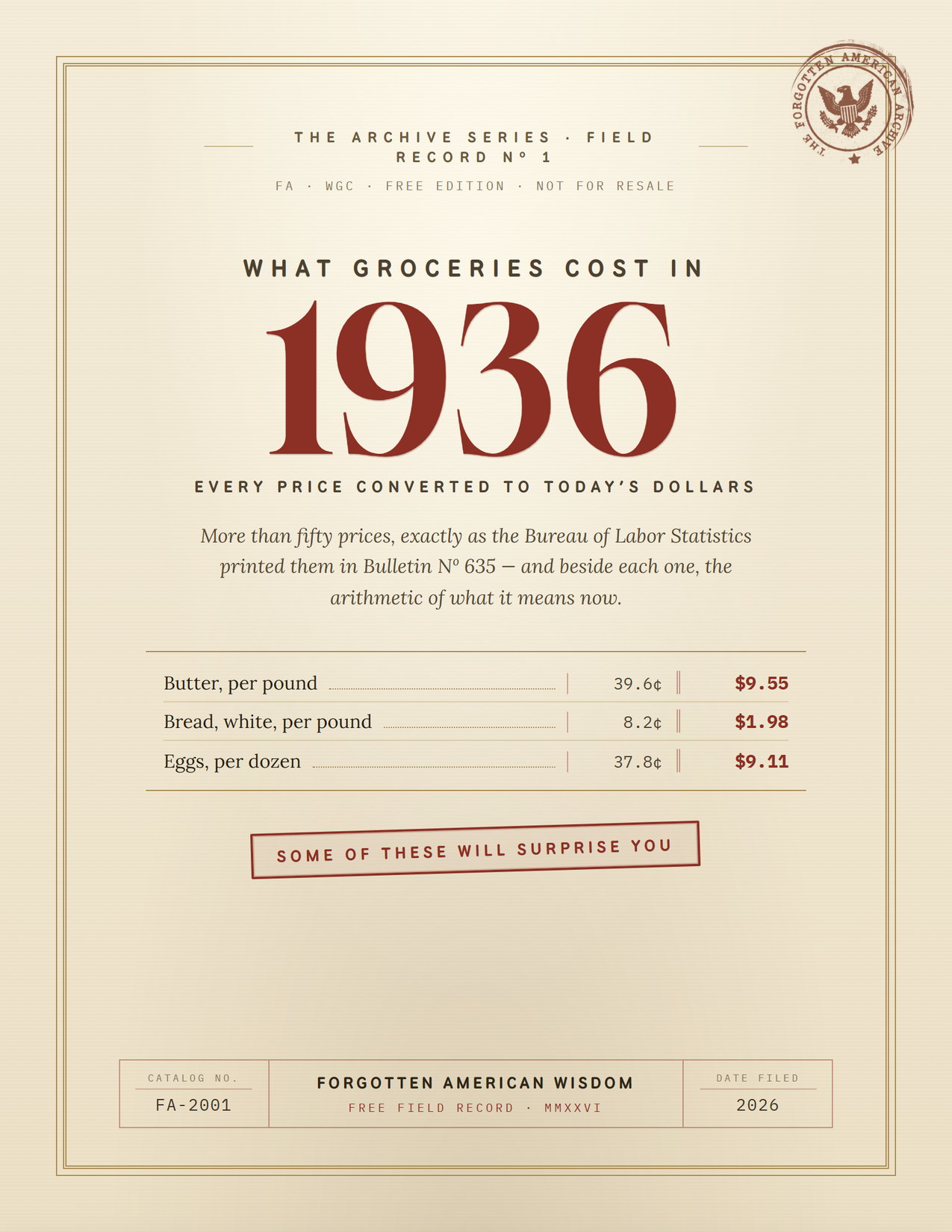
10 PAGES · LARGE COMFORTABLE TYPE · MADE TO PRINT
Three of the fifty-eight entries inside. Some will look familiar. Some will look upside down. All of it is real.
What’s Inside the Booklet
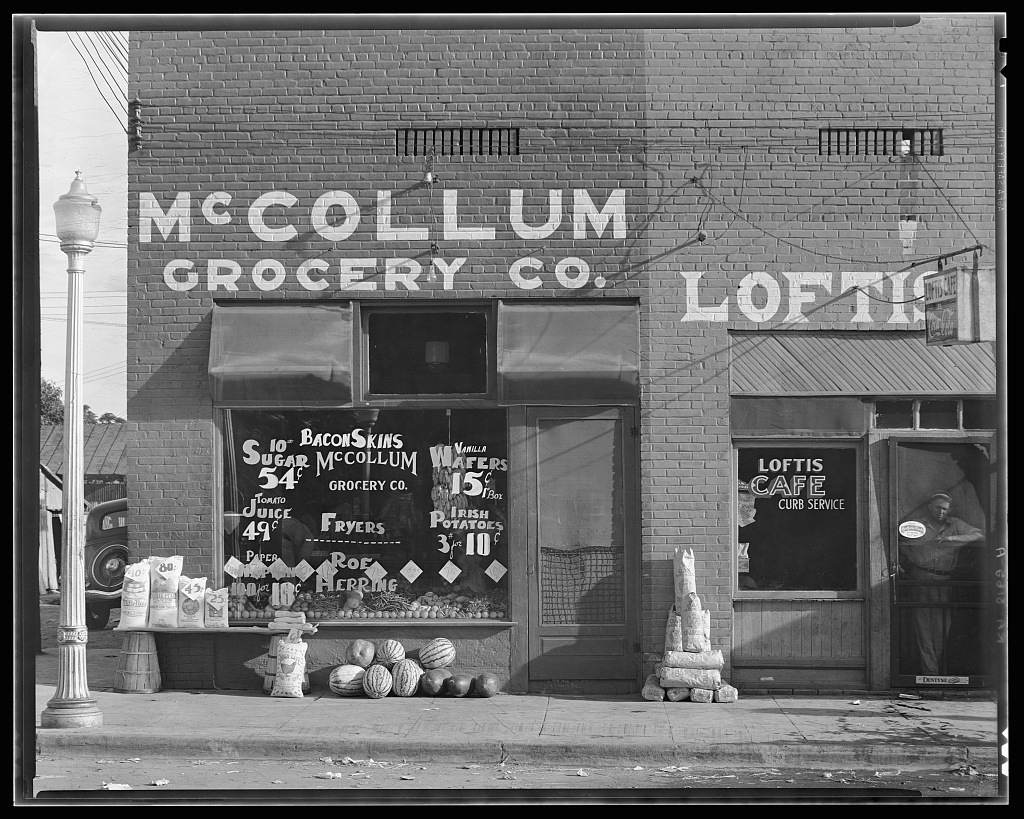
A reader’s edition of Bureau of Labor Statistics Bulletin Nº 635 — the prices clerks wrote down in fifty-one American cities, every other Tuesday, all through 1936.
The Full Price Table
58 grocery prices — bread & flour, the meat counter, dairy & eggs, produce, the pantry shelf — each shown in 1936 cents and today’s dollars.
What a Week’s Pay Bought
The 1936 factory wage, the median family income, W.P.A. relief pay — and what one week of basics actually took out of a $21.56 paycheck.
The Real Price Was Time
A pound of butter cost 43 minutes of factory work. A dozen eggs, 41. The table nobody shows you — prices measured in worked minutes.
Every Source, Printed
A full citations page — bulletin, table, and page number for every figure, so you can check us against the government’s own record.
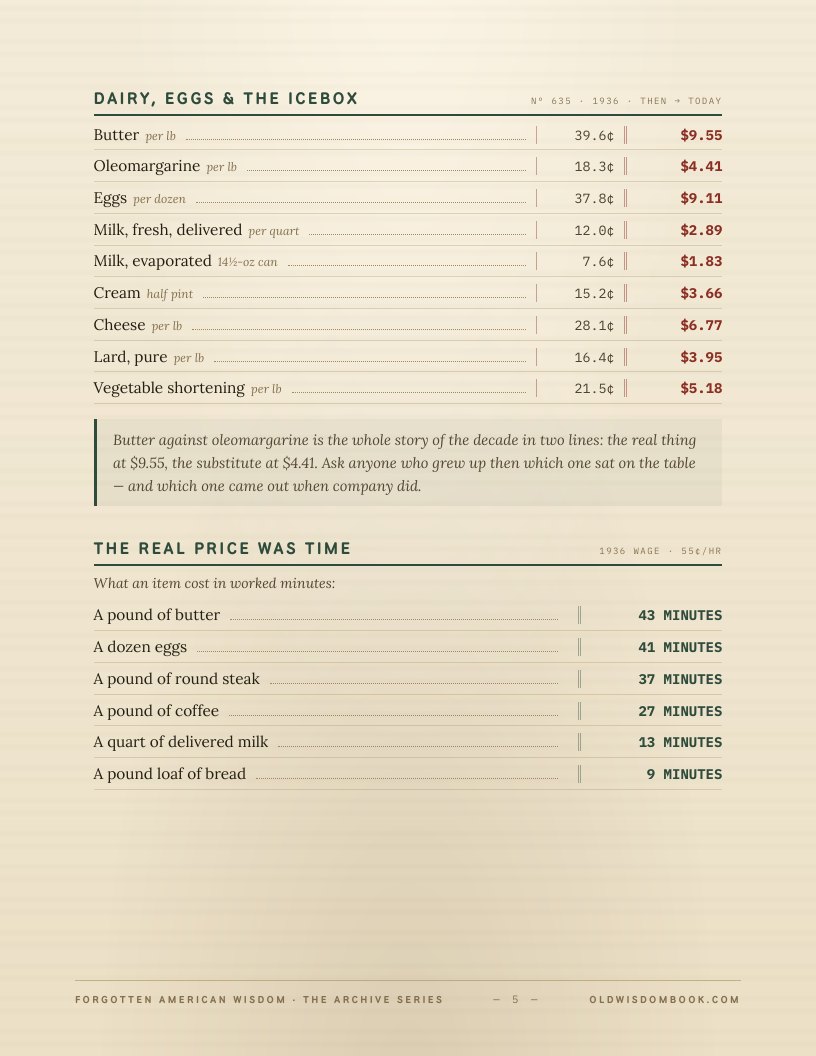
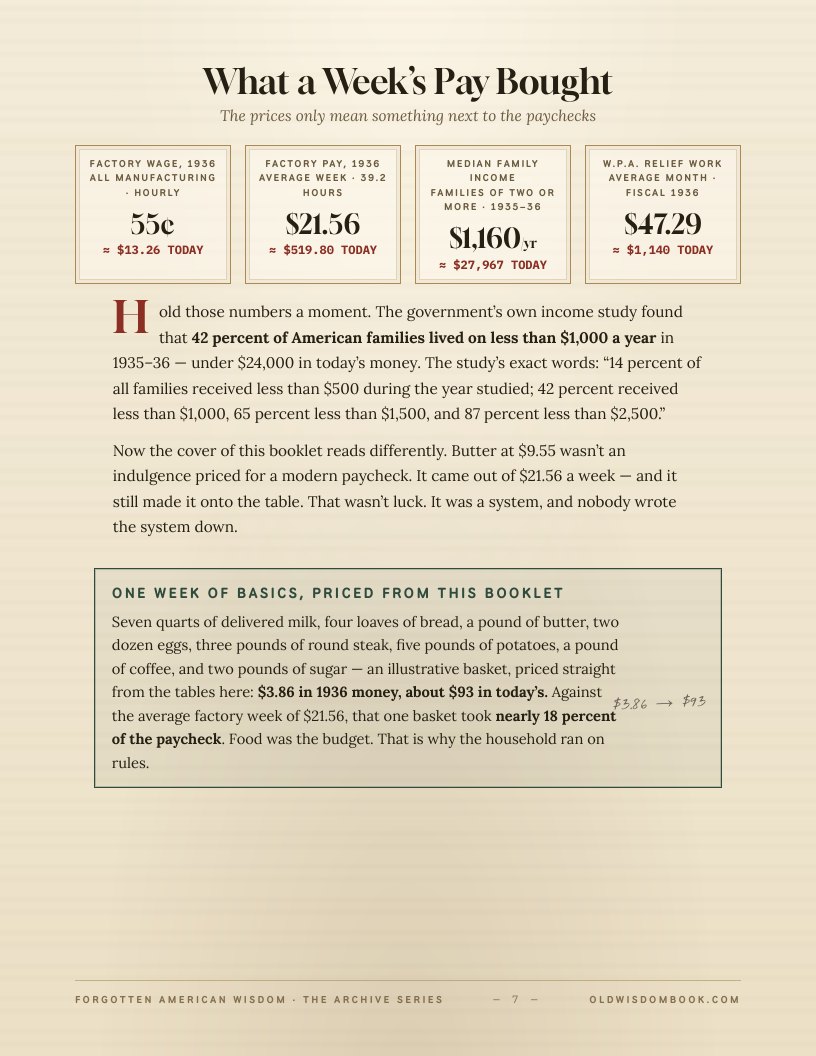
Not memory. Not folklore. The record itself.
Where the Numbers Come From
“These agencies distribute the schedules to approximately 2,000 food dealers on the date set for price collection… selected from those patronized largely by wage earners.” — BUREAU OF LABOR STATISTICS, BULLETIN Nº 635, PAGE 10
- Every price transcribed from the original 1937 government bulletin — not from internet lists.
- Conversions use the Bureau’s own Consumer Price Index, 1936 → 2026.
- From the makers of the Forgotten American Wisdom channel — where every figure is checked before it’s spoken.
Fair Questions
Asked by careful people. We’d ask them too.
Is it really free?
Did a person actually research this, or is it AI-written filler?
What format is it? Can I print it?
What happens after I sign up?
Ten Pages Here. Ninety in the Book.
Your free booklet is a single year: 1936, fifty-eight entries. Volume I: What Things Cost, 1900–1975 is the whole run, every decade from the nickel bread to the gas lines. The Complete Archive adds how the money was kept and a family almanac you fill in yourself. Every figure is converted to today’s dollars, and every source is printed at the back.
★ NEW 2027 EDITION · $95 FOUNDING PRICE SEND ME THE COMPLETE ARCHIVE · $957‑day money‑back guarantee. All three volumes and three bonuses, as PDFs in large comfortable type. No apps, no subscription, yours to keep and print.
The Refrigerator Is Waiting.
Get the table, print it, and let 1936 start the conversation.